Veggie Garden Update

It’s been a while since I’ve posted any updates (like 3 years!) Things are still going well with the veggie garden, although summer is always a challenge and it tends to get a bit feral. Have almost given up on trying to grow any type of tomato as either our dogs eat them or the King Parrots… seems we can’t win!

We’ve just come in to winter now and the garden is looking amazing. We had good rain in early April and then again a week or so ago and nothing makes vegetables jump out of the group like fresh rain. We’ve been picking kale, a variety of lettuces, beetroot leaves, some japanese greens, coriander, parsley (flat leaf and curly) and spinach. Rather  than harvest the whole plant we just pick a selection of leaves every few days, tear them up and keep them in the fridge. We’ve also got a bumper crop of wild lettuces coming up all over the place, courtesy of allowing a couple of plants to run feral each year and drop a bunch of seed. It’s amazing that the seed seems to survive all summer long in blistering heat and with not much water and then jumps out of the group once the weather cools off.

I’ve got some beans in – being optimistic I can squeeze them in without them getting frosted and have just planted some peas and snow peas this morning.

Here is a pic taken in the garden this morning.

IMG_2330

Training the Piglets to Electric Fencing

Three weeks ago we welcomed two new residents to our farm. Two little Tamworth piglets, who ultimately will be destined for the freezer, but in the meantime we’ll give them a good life and use their natural talents to help work over some of the harder packed areas of soil in our horse paddocks.

We were fortunate to find a local farm that breeds a small quantity of piglets each year for their own purposes, selling the surplus. Prior to arriving at our farm the pigs had been roaming freely across their breeders farm, so we thought it best to begin with some training to accustom the little guys to electric fencing which they will be housed behind as we rotate their small paddocks around.

We found a blog post on the Milkwood Permaculture site which detailed how they trained their piglets to respect two strands of electric fence (a technique they garnered from Polyface farms), and so we set up a similar triangular training paddock here on our farm which worked spectacularly. We probably went a bit overboard with the height of the electric fence at the front but we weren’t sure of their jumping capabilities!
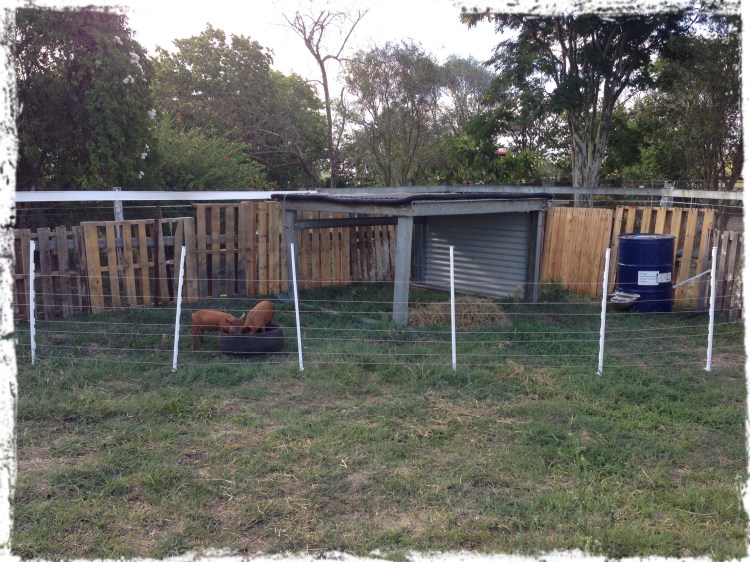
Pig Training Paddock

It really only took a day for the piggies to understand the electric fence concept, but to be safe we kept them in this paddock for just under a week, before moving them on to a new section of ground where they were completely enclosed with electric fence (pictured below).

Pigs Behind 3 Strands Electric Wire

We bought the electric fencing energiser, posts and wire from ebay as in our experience, the premium name brand electric fencing products such as Gallagher, Speedrite etc last no longer than the cheap Chinese imports (and in reality they are all probably coming from the same/similar factories in China anyway). Everything was delivered within a couple of days with free shipping so can’t really argue with that. The energiser we have for the pigs is solar powered so allows the paddock to be located wherever we please, without being reliant on being in contact with the main fencing system of the farm.

We have also got a small solar powered pump which we can use to access various dams to create nice mud patches for the pigs to work over and also to top up their water drum with.

In terms of feed, we already purchase bulk horse feed pellets (Barastoc Breed N Grow) and keep them stored on our farm in a silo. Although there might be a marginal gain to be had by feeding them on a strict pig grower ration with a slightly more optimal amino acid profile and lower fibre content, in reality for us, we are not trying to push for optimal growth rate for any market requirement, and it works out far more economical for us to use the feed that we buy in 4t loads instead of small 25kg bags. The protein content is satisfactory at 17% and really the additional bulk is probably insignificant anyway given that our pigs have free access to pasture (which they LOVE even though it is a bit miserable at the moment due to the prolonged drought being experienced over most of Queensland).

In Pursuit of a Garden Fork That Wont Break or Bend

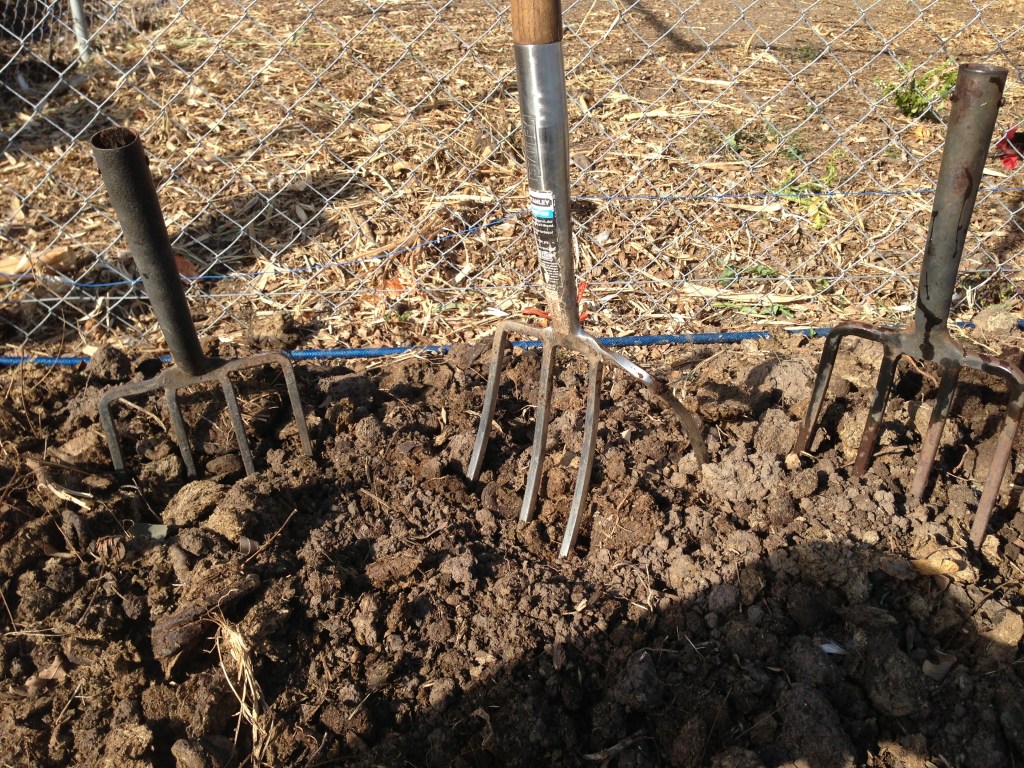
This year we decided to spend a few extra bucks to get a “decent” garden fork. We got sick of continually breaking the handles on the previous cheapies that we had. In any case this year we became the proud owners of a nice shiny Stanley brand of garden fork.

I’m not a tool expert, but I had thought Stanley was a quality tool brand. We spent around $70 on the thing which certainly prices it towards the upper end of the garden tools in our shed. In any case it appears our shiny fork is made of aluminium foil as the tines bend continuously. We haven’t broken the handle yet – nor do we expect to when the tines bend as soon as it experiences any sort of load.

I guess its only a matter of time before a tine snaps off completely as the repeated bending and re-straightening takes its toll.

In any case a one star review for the Stanley Garden Fork. They are supposed to be made for digging, not looking at. If you are shopping for a garden fork then I’d suggest steering clear of this one. Looks great, but thats certainly the only good thing about it.


Garlic Southern Glen

I thought I’d rip a few garlic plants out of the ground today to see how they are progressing. The bottom few leaves have started to yellow and die so its about time to commence the harvest (according to my google research, having not grown it before!). Spring seems to have arrived a bit earlier this year as I wasn’t expecting to do this until mid September.

The variety we have planted is Southern Glen and it certainly looks great! I’ll pull the rest of it out over the next week or so and hang it in the shed to dry for a few weeks. We purchased the seed cloves from The Diggers Club earlier this year when we visited their Heronswood garden. Its pretty pricey, so we thought we’d try and save some cloves from this years harvest for replanting next year.

Dried Banana & Apple

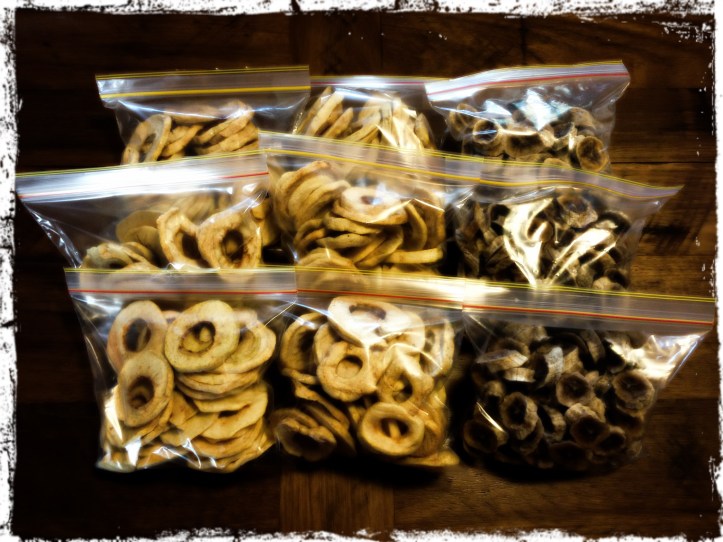
We’ve had our dehydrator running overtime this week. Our local fruit shop had a great price on apples (about 20kg for $6!) and bananas. One thing I have learned since we started using a dehydrator about 12 months ago is that apples do not need to be first grade to make really nice dried fruit. Some of these apples were a little floury ( I guess they were on special for a resaon) but the dried product is still deliciously sweet and yummy.

Homemade dried banana is so much nicer than the disgusting sickly sweet variety you can buy in stores (which are more like banana chips). I detest the store bought variety and was skeptical about bothering to make our own until I discovered how different it was. Ours are a bit chewy and make a great snack that you cant just guts down (ie it needs a bit of chewing). Our 2yo loves it (in fact she loves all of the dried fruit we make).

I cut both the bananas and the apples just under 1cm thick (probably around 8mm). The time taken for each batch was around 10-12 hours I guess, although I must admit I don’t strictly measure the time. We just turn it on and keep checking on it once it starts to get close to the texture/moisture level we require.

The best guide we found for how to know when the dried fruit is “done” is to pop a few pieces into a plastic bag and see if any moisture condenses on the inside of the bag. Since we discovered this trick, we’ve becomes a lot more brave in terms of not drying everything out to a crisp! Now we can just go by feel and only test some in a bag if its something we haven’t dried before.


homemade dried fruit is far superior to anything you can buy in the shops – and its preservative free.

Scenic Rim 4Real Milk Official Launch

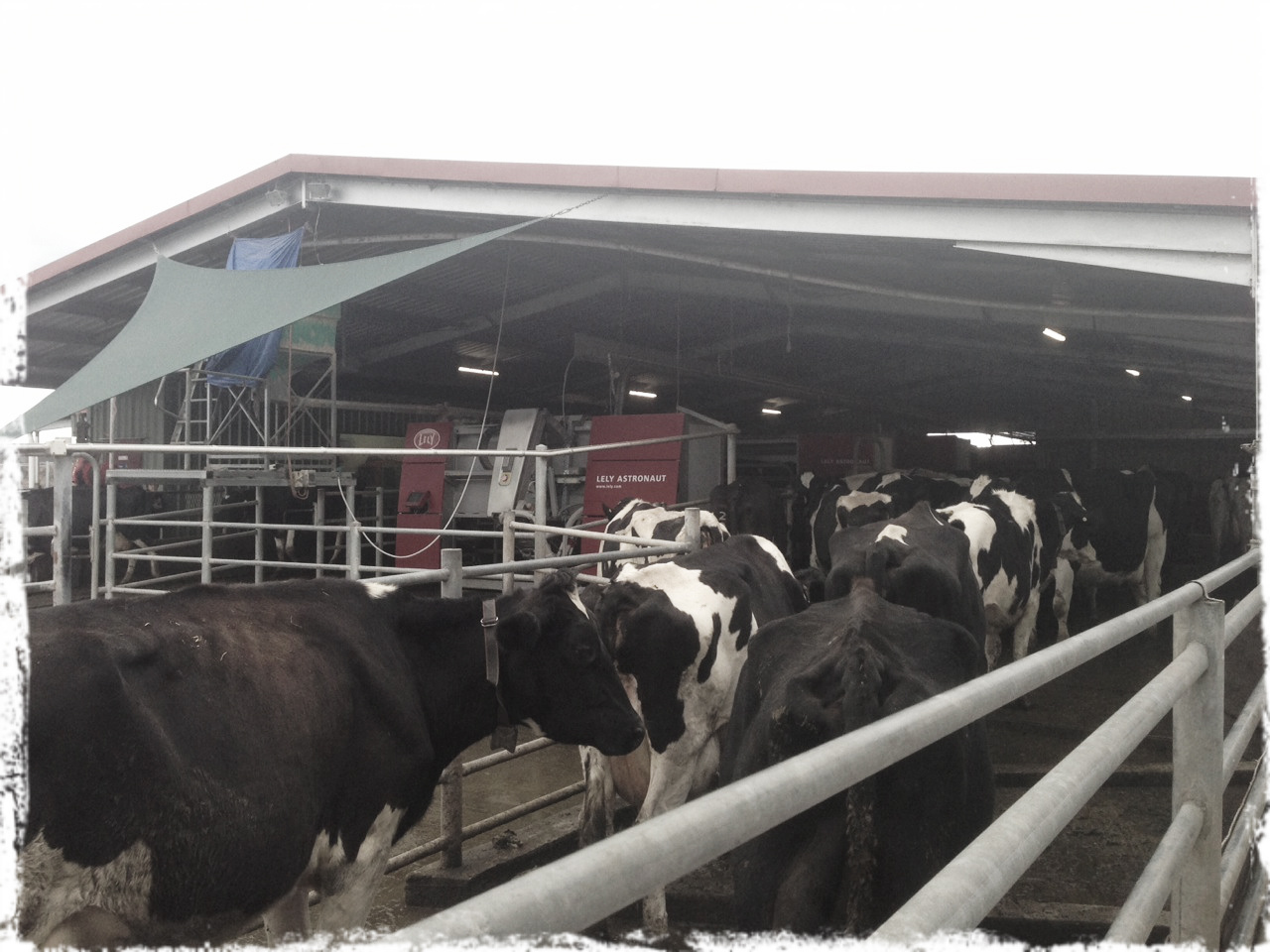
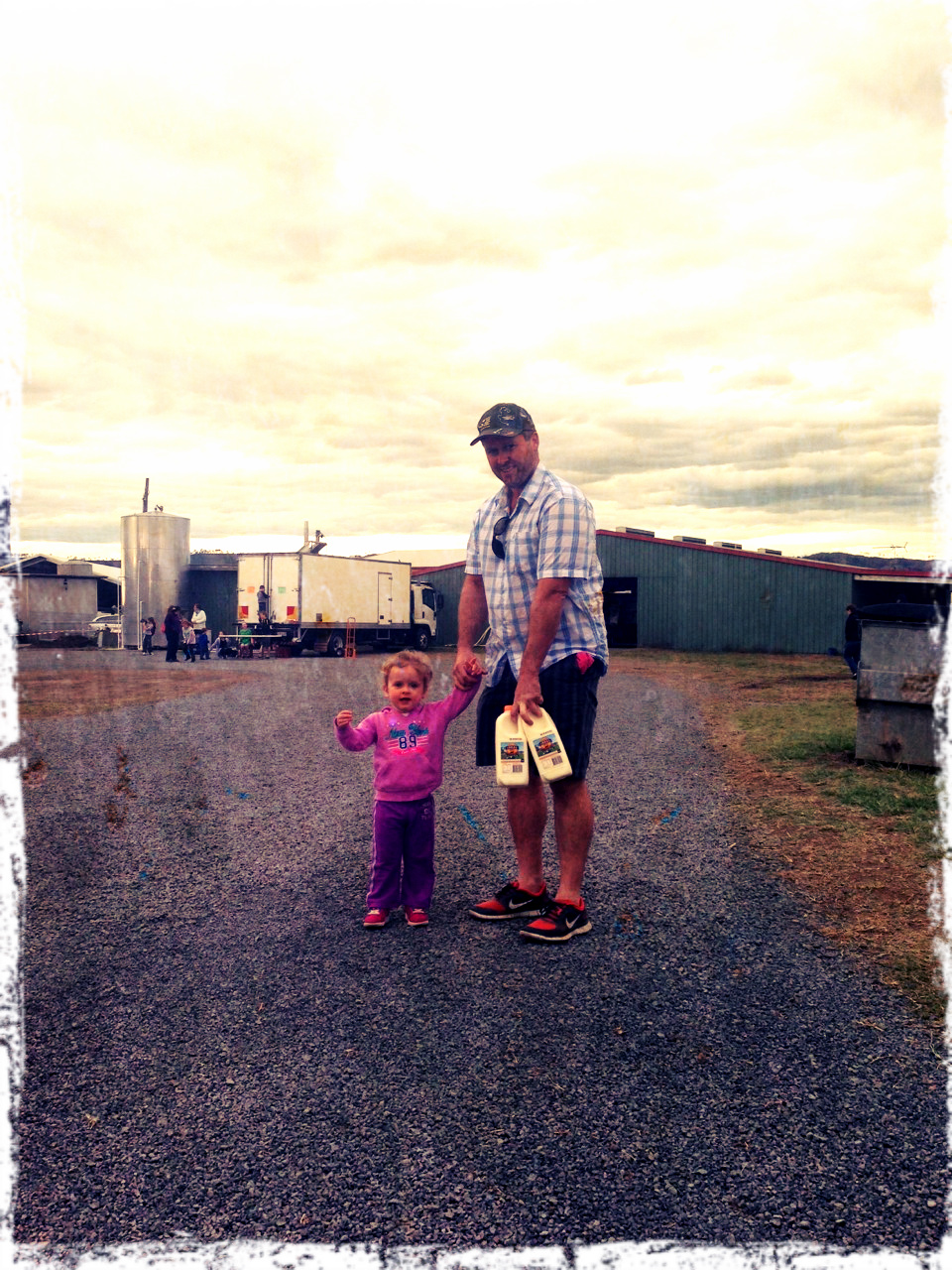
Following on from my earlier post about Scenic Rim 4Real Milk we we took the opportunity to visit the farm when they held their open day and official launch south of Beaudesert earlier this week.

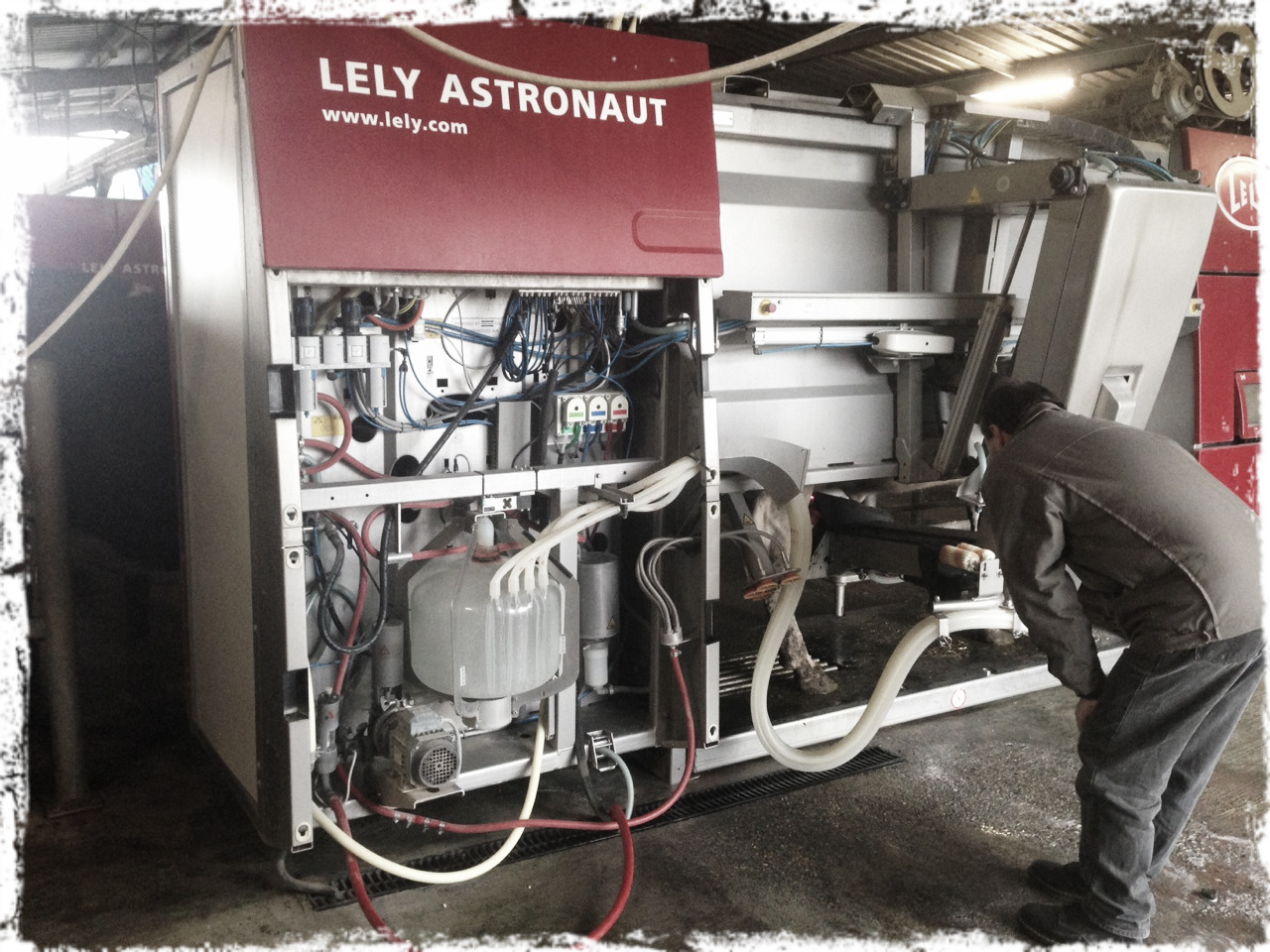
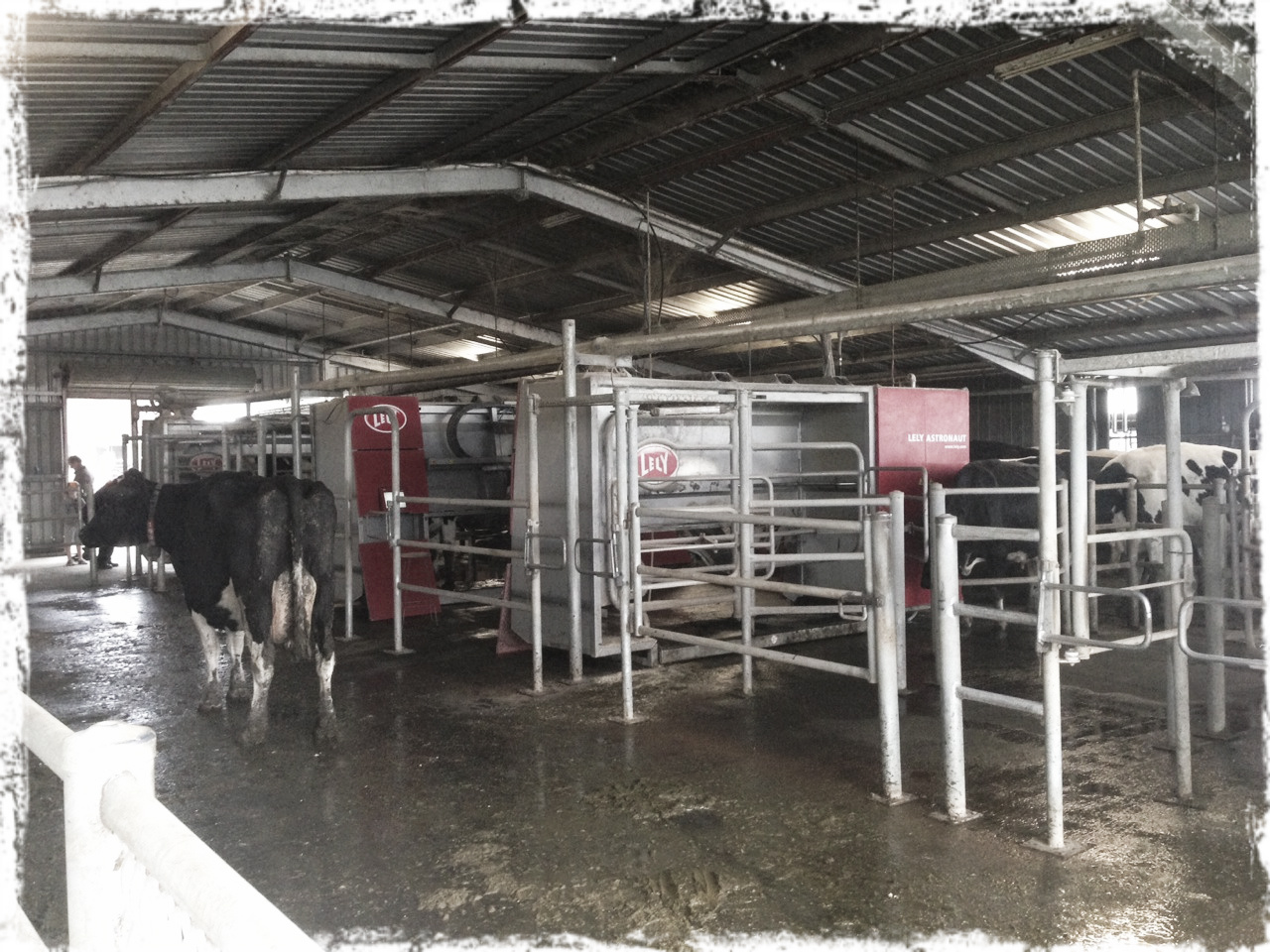
The dairy is a robotic dairy, which means all the actual milking is undertaken by robots with little human intervention. The cows are free to visit the milking stations at their leisure (and of course they are rewarded with a yummy feed while they are being milked). It was quite a sight to behold and relaxed and peaceful were the first thoughts that sprang to my mind when watching the cows move slowly through the dairy. Without a doubt this is a top notch farm that the owners are proud to display – and so they should be.

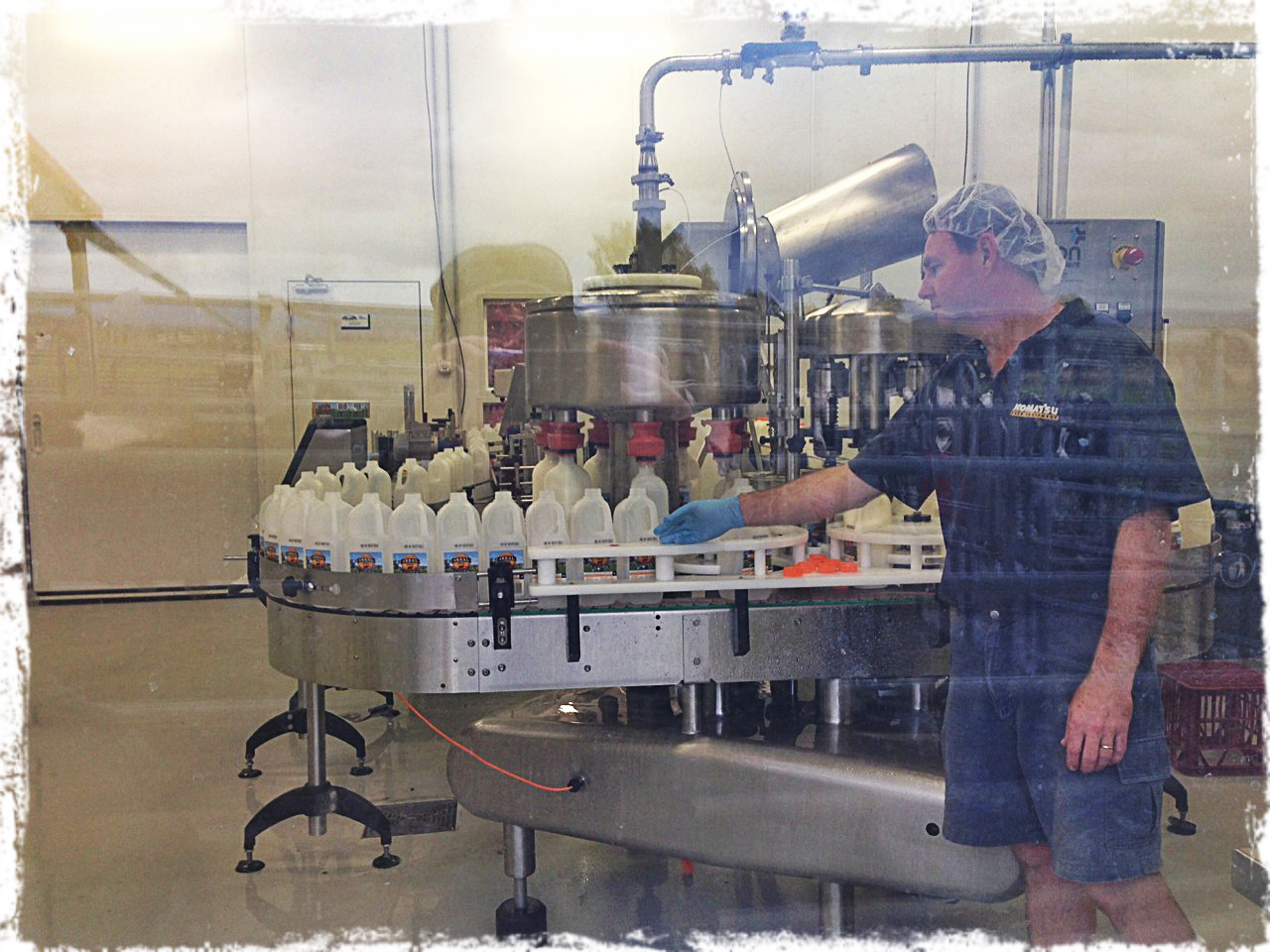
Within metres of the dairy is the actual milk bottling plant. You can just turn around from looking at the cows and look through the window and see the bottling line in action. Low food miles at its very best!

Scenic Rim 4Real Milk

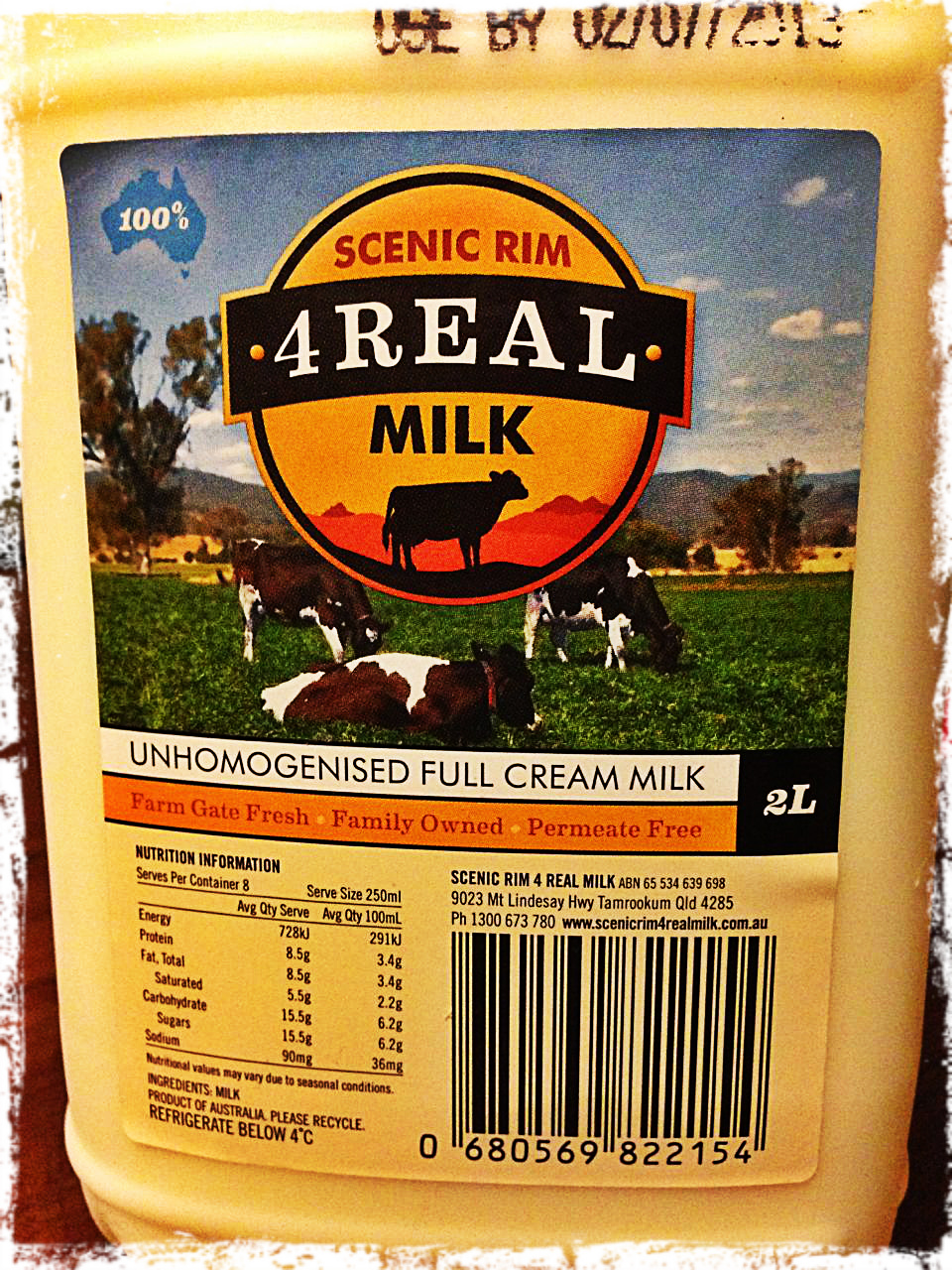
Last week marked the launch of a local dairy farmers attempts to save his family farm by bottling and selling his own milk. Unless you have been living under a rock you would have seen that the major supermarket chains in Australia have taken it upon themselves to bastardise the price of milk by using it as a loss leader in their stores. ie they are selling it below cost to get you the consumer into their store so that you will hopefully buy other more profitable (and probably highly processed) lines from them.

We are happy to support Scenic Rim 4 Real milk because it ticks a lot of boxes for us. One is that they produce full fat unhomogenised milk (thus being less processed than its homogenised counterpart) and two is that it is both produced and processed locally which saves food miles over other brands of milk sold in our stores. The third bonus is of course that we are supporting a local farmer with the profits being returned to the farm and local merchants rather than a faceless multinational corporation.

Scenic Rim 4 Real milk is not unique in its efforts and there are other dairy farms around Australia who have already undertaken these measures so where ever possible we suggest trying to source a locally produced and processed product. And of course choose unhomogenised over homogenised milk. Remember there are supposed to be globs of cream in your milk!

Mobile Chicken Coop

Here it is! The (almost) finished new mobile chicken coop aka chicken caravan, chicken trailer, mobile chook house.

Whilst we have  always had a traditional chook house where we have kept our egg laying girls for several years, we thought we would try something different for our growing flock of Light Sussex we are developing for our meat birds. Having seen the great system of strip grazing/stock rotation used by Taranki Farms where they follow heavy grazing by cattle with their free range layers, we thought we could probably instigate something similar here in our horse paddocks. This system provides a great tool to disperse the horse poo, adds additional valuable fertiliser, as well as provides fresh foraging opportunities for the chickens so that we eventually will have true pastured, free range chicken meat in our freezer.

At this stage we have not started strip grazing our horses so we are only approximating what the system could eventually become. We surround the mobile chicken coop with electrified netting to keep the chickens in and the local foxes and dogs out. We also lock the chickens inside the coop each night and let them out in the morning to further try and protect them from predators. This also allows us to easily move them to a new location in the mornings before we let them out. With the flock size at present they spend approximately one week in the same location in the paddock, however as the flock grows we envisage moving them every other day or perhaps even daily if required. The trailer can be easily moved and manoeuvred with our quad bike.

The chicken trailer is all steel construction based on a small catamaran trailer we picked up cheaply off ebay. We then stripped it back and welded on a steel frame and cladded it with 0.4mm galvanised sheeting. The sheeting was screwed to the frame with alloy screws. The floor is mesh (75mm x 75mm x 3mm) to allow the poo to fall through and also keep the chickens safe at night. The perches are timber (pine roofing batons 35mm x 70mm) and are 40cm up from the floor. The roof is sheets of corrugated iron. Still to be done is the  installation of roll away nesting boxes in one end to thwart the crows (we have a core band of hens that we use to lay eggs for setting in our incubator). We are also going to put gas struts on the lift out side doors to do away with the sophisticated stick system we currently have in place.

For feeding we have installed Dine-A-Chook feeders and for water we have used the Dine-A-Chook cup waterers with 20L plastic drums recycled from our horse feed room. We might look at trying to shade the water drums as we are a bit concerned about the temperature of the water perhaps being too high in summer.

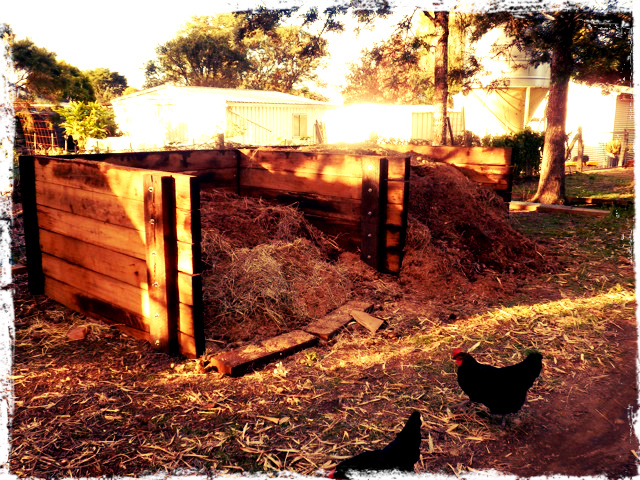
Stable Manure Compost Bays

Another new development on our farm has been to commence the construction of bays in which to compost our stable manure. We have rubber stall mats in our stables (Stable Comfort brand) which helps us minimise the amount of stable bedding we need to use and we highly recommend them. However, even with the mats, we find it is still essential to use a small layer of bedding (usually pine shavings) to absorb the urine.

Prior to commencing composting  we used to just directly spread the used bedding/manure straight onto our paddocks. We have a manure spreader which we tow with our quad bike which does a great job of spreading. However,  now we will use it to to spread the finished compost instead of the fresh manure and bedding. We feel by composting we will be getting much more value from this plentiful resource by better converting it to fertiliser as well as being able to utilise it to manufacture our own “compost tea” to also use on our pastures.

We are using a hot composting technique which requires that the compost is turned regularly to maintain aerobic conditions within the pile. We have a small tractor with a bucket which we use to turn the pile when it reaches around 65 degrees Celcius. We also monitor the moisture level within the pile and add extra water when turning if we feel it is too dry.

At present we only have 2 bays, but we are just about to commence the construction of another 2 bays which will give us sufficient spare bays to allow us to have a spare bay for turning and a couple of other bays containing compost at varying stages.

We are aiming for approx 25% – 30% manure content within the piles and will monitor this as we go to see if it sufficient to allow the breakdown of the high carbon content pine shavings within a reasonable time period (at this stage we are hoping to have finished compost within 4-6 months of the the completion of a full bay).

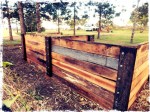
Dimensions of our bays are 2.4m x 2.4m and 1.2m high. We have used untreated hardwood sleepers (200mm x 75mm x 2.4m) for the entire construction and treated any cut surfaces. They are coach screwed and bolted together with M6 sized bolts.

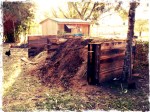
More pics of our manure compost bays below.

Mungalli Creek Dairy and Free Range Eggs

We recently visited family in far north Queensland and while there took a trip to visit the Mungalli Creek Dairy farm at Millaa Millaa. When we aren’t getting milk from our own cows at home, we always try and buy unhomogenised full cream milk. We made the switch from low-fat/homogenised milk products a couple of years once we understood the myth of “low-fat” everything, and how homogenisation was just another level of processing our food could do without. (Cyndi O’Mearas book Changing Habits is a very good read on this topic).

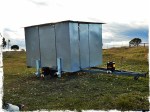
Not only did we enjoy visiting the farm and sampling some delicious cheeses and yoghurts in their cafe, we also were most interested to see their new venture into biodynamic free-range egg farming. I took a couple of pics of their mobile chicken coops which were of particular interest to us as we have just recently finished creating our own mobile chicken coop/caravan for our own developing Light Sussex flock.

Also found this article here in the Townsville Bulletin when I was looking up a bit more info on the dairy and their operations. Happy chickens 🙂

IMG_2314      IMG_2313